What Is EQ (Equalization)?
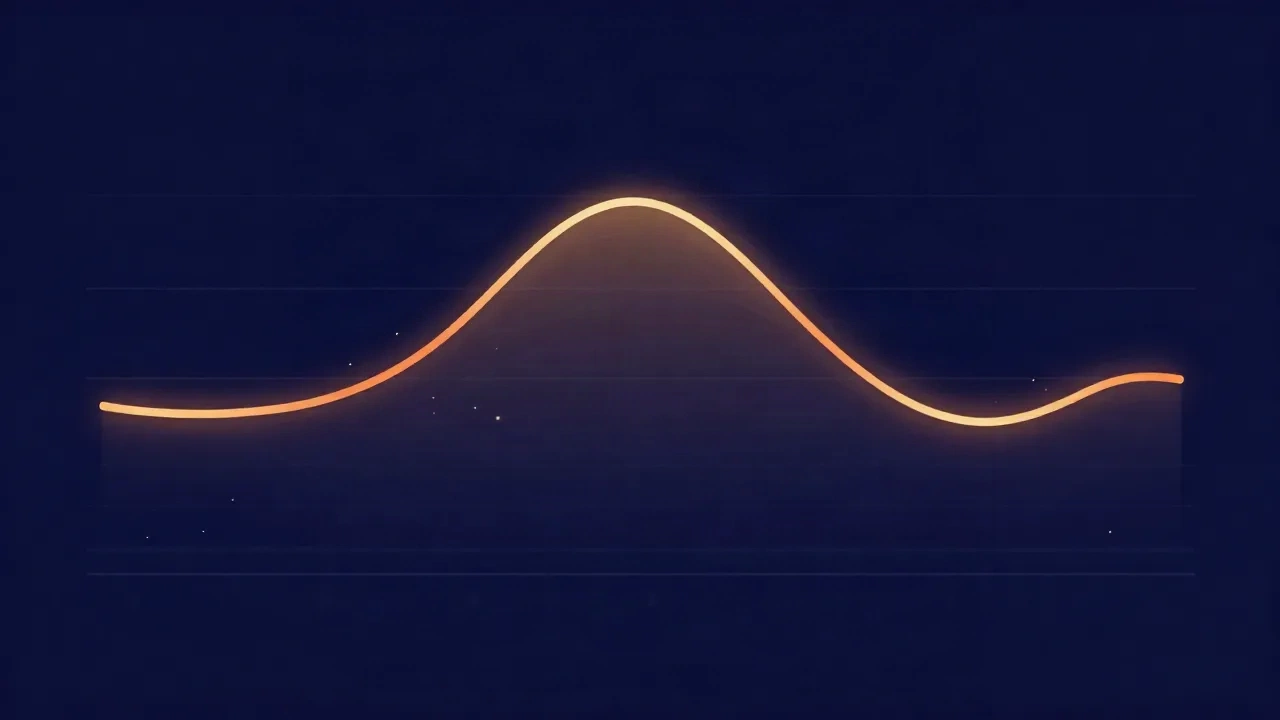
EQ, short for equalization, is the process of adjusting the balance of frequencies in a sound by turning specific ranges up or down. Every sound is a stack of frequencies — lows, mids, and highs all layered together — and an equalizer lets you boost the ranges you want more of and cut the ones you want less of, without touching the rest. It is the single most-used tool in audio, because almost every mixing, mastering, and cleanup problem is really a frequency problem in disguise.
The name comes from telephone and broadcast engineering, where the goal was to "equalize" a signal that had lost some frequencies in transit. Today EQ is less about repair and more about shaping: making a muddy vocal clear, taming a harsh cymbal, or carving out room so a bass and a kick drum stop fighting.
Frequencies, briefly
To understand EQ you need one idea from the underlying physics: pitch is frequency, measured in hertz (Hz). Low, rumbling sounds are low-frequency; bright, airy sounds are high-frequency. Human hearing runs from roughly 20 Hz to 20,000 Hz (20 kHz), and everything you hear lives somewhere on that line. If you want the full picture of how that spectrum works, what audio frequencies are covers it in depth, and the ceiling of that range is capped by the recording's sample rate — a file can only contain frequencies up to half its sample rate.
An EQ is simply a set of controls placed along that 20 Hz–20 kHz line. Point at a spot, decide how much to boost or cut, and how wide a neighbourhood of frequencies to affect. That's the whole mechanism.
What lives where: the frequency bands
Engineers loosely divide the spectrum into named bands. The boundaries are approximate and everyone draws them slightly differently, but the map is useful because instruments and problems tend to cluster in predictable places.
| Band | Rough range | What lives there | What a boost or cut does |
|---|---|---|---|
| Sub-bass | 20–60 Hz | Deep rumble, the lowest kick and bass energy, felt more than heard | Boost adds weight and power; cut tightens a boomy, flabby low end |
| Bass | 60–250 Hz | Body of bass guitar, kick drum, low male vocals | Boost adds fullness; too much sounds muddy or boomy |
| Low-mids | 250–500 Hz | Warmth of most instruments — and the home of "mud" | Cutting here often clears a congested, cluttered mix |
| Mids | 500 Hz–2 kHz | The core of vocals, guitars, snares; where the ear is most sensitive | Boost brings a sound forward; cut pushes it back |
| Presence | 2–6 kHz | Clarity and "attack" — consonants, pick attack, definition | Boost adds intelligibility and bite; too much sounds harsh |
| Brilliance / air | 6–20 kHz | Cymbal shimmer, breathiness, sparkle, "openness" | Boost adds air and sheen; cut tames sibilance and hiss |
You don't have to memorize this. The point is that when a mix sounds muddy, an experienced ear reaches for the low-mids around 300 Hz; when a vocal sounds "harsh," it reaches for the presence range around 3 kHz. EQ turns a vague feeling into a specific place on the dial. These moves are also visible: on a spectrogram, a boost brightens a horizontal band and a cut darkens one, so you can often see the problem before you hear the fix.
The main types of EQ
Not all equalizers work the same way. A few shapes and control styles cover almost everything you'll encounter.
Parametric EQ is the most flexible and the studio workhorse. Each "band" gives you three controls: frequency (where on the spectrum you're working), gain (how much you boost or cut, in decibels), and Q (how wide or narrow the affected range is). A low Q makes a broad, gentle bump; a high Q makes a surgical spike that touches only a sliver of the spectrum. That precision is why parametric EQ handles both musical tone-shaping and pinpoint problem-solving.
Graphic EQ trades flexibility for speed. It splits the spectrum into a fixed row of bands — 10, 15, or 31 sliders — each at a set frequency, and you just push each slider up or down. It's the layout most people picture when they hear "equalizer," and it's common in live sound and consumer gear because it's fast and visual, if less precise than parametric.
Shelving EQ raises or lowers everything above or below a chosen point, like a shelf. A high shelf lifts (or drops) all the treble above, say, 8 kHz by the same amount — the go-to move for adding overall "air" or warming a bright recording. A low shelf does the same for the bass end. Shelves are gentle and broad, ideal for overall tonal tilt rather than fixing one spot.
Filters are the extreme case: instead of boosting or cutting by a few decibels, they remove a whole end of the spectrum. A high-pass filter (HPF) lets high frequencies pass and rolls off everything below a cutoff — perfect for stripping out low rumble. A low-pass filter (LPF) does the opposite, keeping the lows and removing the highs, useful for taming hiss or creating a muffled effect. Both are technically EQ curves that fall away steeply at one edge.

What EQ is actually used for
In practice, EQ does a handful of recurring jobs.
Fixing muddiness and harshness. These are the two most common complaints, and both are frequency imbalances. Mud is an excess in the low-mids (200–500 Hz) where too many instruments pile up; a gentle cut there opens the mix. Harshness is an excess in the presence range (2–5 kHz); a small dip smooths it. EQ is the direct fix for both.
The high-pass to clean up rumble. Nearly every vocal, guitar, and overhead microphone track gets a high-pass filter as a first move, cutting everything below 80–120 Hz. That region holds no useful content for those sources — only mic handling noise, air-conditioner hum, foot thumps, and stage rumble. Removing it cleans the track and frees up headroom in the low end for the instruments that belong there. It's also a routine cleanup step on a separated stem: after a vocal remover isolates a voice, a high-pass tidies the low-frequency artefacts that separation can leave behind.
Carving space in a mix. When two instruments occupy the same frequencies, they mask each other and the mix turns cluttered. The classic fix is complementary EQ — boost an instrument where it matters most and cut a competitor in that same range, so each has its own lane. A kick drum and a bass guitar both want the low end; EQ decides who gets which slice. This is a tone-shaping job, and it pairs closely with level and dynamics work like gain staging and compression, which control how loud things are while EQ controls what they sound like.
Removing a specific tone. When the problem is one narrow, steady frequency — an electrical hum at 50 or 60 Hz, or a ringing resonance — a very high-Q cut called a notch can remove just that sliver while leaving everything around it untouched. This is exactly the surgical principle a noise reducer uses to notch out mains hum without gutting the rest of the recording.
EQ in mastering
EQ shows up at every stage of production, but it plays a distinct role in mastering — the final polish on a finished stereo mix. Here the moves are subtle and broad rather than surgical: a fraction of a decibel of high-shelf for air, a small low-mid dip to clear congestion, a gentle low-shelf to firm up the bottom. The aim is overall tonal balance, making the track translate well across earbuds, laptops, and car speakers alike, not fixing individual instruments — that ship has sailed by the mastering stage.
On vocalcut.com, the in-browser audio mastering tool includes exactly this kind of processing: a real DSP chain with a rumble-cutting high-pass filter, a five-band equalizer (low and high shelves plus adjustable mid bands), a compressor, and stereo-width control, alongside live loudness metering. Everything runs entirely on your own device — your audio never leaves the browser, and there's no account or upload step (the processing engine downloads to you, not the other way around). It's a practical way to hear what EQ moves do to a full mix, and it sits naturally alongside loudness targets as the two halves of a finished master: EQ shapes the tone, and loudness sets the level.
None of this replaces listening. An EQ can point you at 300 Hz, but only your ears decide whether cutting there made the track better. Used with restraint, though, it's the most powerful shaping tool in audio — the difference between a recording that sounds muddy and one that sounds clear.
Frequently asked questions
What does EQ actually do to sound? It changes the relative loudness of different frequency ranges. Boosting the bass band makes the low frequencies louder relative to everything else; cutting the presence band makes the upper-mids quieter. EQ never adds frequencies that weren't there — it only turns up or down the ones already present in the recording.
What is the difference between boosting and cutting? Boosting raises the level of a frequency range; cutting lowers it. Many engineers prefer cutting because it tends to sound more natural and avoids piling up energy that can cause clipping — if a vocal sounds buried, cutting the instruments around it often works better than boosting the vocal itself. Both are valid; the ear decides.
What is a high-pass filter used for? It removes low-frequency content below a set cutoff, letting the highs "pass" through. The most common use is cleaning up rumble, hum, and handling noise from vocal and instrument tracks by rolling off everything under roughly 80–120 Hz, where those sources have no useful content. It frees up the low end and tightens the overall sound.
Is EQ the same as bass and treble knobs? Those knobs are a very simple form of EQ — usually two shelving filters, one for the lows and one for the highs. A full parametric or graphic equalizer just gives you many more bands and finer control over exactly which frequencies you affect and by how much, but the underlying idea of turning frequency ranges up and down is identical.