What Are Audio Frequencies?
Audio frequency is how fast a sound wave vibrates, measured in cycles per second — a unit called the hertz (Hz). A wave that repeats 100 times a second is a 100 Hz sound; one that repeats 10,000 times a second is a 10,000 Hz (10 kHz) sound. The faster the vibration, the higher the pitch your ear hears. That single idea — vibration speed equals pitch — is the foundation under nearly everything else in audio, from why a bass note feels different from a whistle to why an equalizer has the controls it does.
This guide is about frequency itself: what it is, the range humans can hear, where different sounds live in that range, and why a working knowledge of it makes editing and cleanup so much easier. If you're curious how those frequencies get captured into a digital file, that's a separate question answered in our guide to audio sample rates — here we're staying with the sound itself.
Frequency, pitch, and the hertz
Sound is a pressure wave moving through air. A guitar string, a vocal cord, or a speaker cone pushes the air back and forth, and each complete back-and-forth is one cycle. Frequency counts how many of those cycles happen every second. More cycles per second means a higher-pitched sound; fewer means a lower one.
Pitch is simply how your brain interprets frequency. When a singer goes up an octave, they double the frequency of the note — the A above middle C is 440 Hz, and the A an octave higher is 880 Hz. That doubling relationship is why octaves sound "the same but higher." A key finder that estimates a song's musical key is really analysing which frequencies dominate the recording, because pitch and frequency are two words for the same physical thing. The same is true when DJs line up two tracks — matching keys is matching frequency relationships, which is covered in beatmatching and key matching explained.
Frequency is not the same as loudness. Loudness is how much the air moves (the size of the wave), measured in decibels; frequency is how fast it moves. A quiet high note and a loud high note are the same frequency at different volumes. Keeping those two ideas separate is the first step to thinking clearly about sound.
The audible range: 20 Hz to 20 kHz
Human hearing covers roughly 20 Hz at the low end to 20,000 Hz (20 kHz) at the high end. Below 20 Hz you stop hearing a pitch and start feeling vibration in your body — that's infrasound. Above 20 kHz is ultrasound, which some animals use but people can't perceive.
That 20 kHz ceiling is an ideal, not a lifelong guarantee. Hearing narrows with age and exposure to loud sound, and the top of the range goes first. Many adults top out closer to 15–16 kHz by middle age, and heavy noise exposure lowers it further. This is a normal, gradual process — it's why a teenager might hear a high whine from an old TV that an adult in the room can't. The very lowest frequencies stay accessible longest; it's the sparkle and air at the top that fades.
The frequency bands and what lives in each
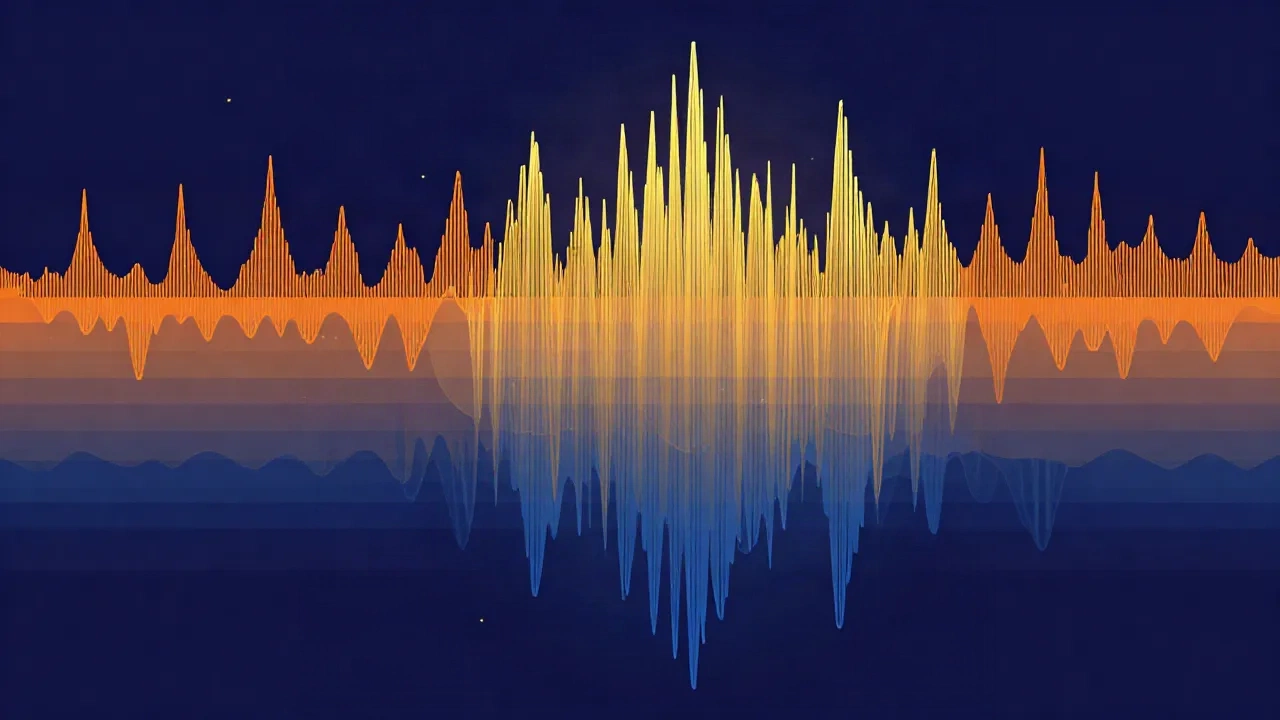
Engineers split the audible range into rough bands. The boundaries aren't exact — different sources draw them slightly differently — but the map is consistent enough to be genuinely useful. Here's a practical breakdown of where common sounds sit.
| Band | Rough range | What lives there |
|---|---|---|
| Sub-bass | 20–60 Hz | Deep rumble, the lowest kick and synth bass, the felt-not-heard bottom |
| Bass | 60–250 Hz | Bass guitar, kick drum body, the low fundamentals of most instruments |
| Low-mids | 250–500 Hz | Warmth and body of vocals, guitars, piano; where "mud" builds up |
| Mids | 500 Hz–2 kHz | The core of most instruments and the human voice; where the ear is most sensitive |
| Presence | 2–6 kHz | Clarity and attack — consonants in speech, the bite of a snare or guitar |
| Brilliance / air | 6–20 kHz | Cymbals, sibilance ("s" sounds), the sparkle and openness at the top |
A few things stand out on this map. The human voice mostly lives in the low-mids through presence range — its power is in the middle, not the extremes, which is why a phone call (which throws away the top and bottom) is still perfectly intelligible. The ear is most sensitive around 2–5 kHz, right where speech consonants sit, so small changes there are very audible. And the extremes at both ends carry feel and sparkle rather than the main information — you can lose a lot of sub-bass and top-end and still recognise a song.
Knowing this map is what makes an equalizer intuitive rather than mysterious. When you reach for an EQ inside a tool like the audio mastering tool that shapes these frequency bands, you're deciding to boost or cut a specific slice of this chart — more air up top, less mud in the low-mids — instead of turning knobs blindly.
Fundamentals and harmonics: why a violin and a flute differ
Here's the part that surprises people. When a violin and a flute play the exact same note — say, an A at 440 Hz — they're both vibrating at 440 Hz. So why don't they sound identical?
Because almost no real sound is a single, pure frequency. A played note has a fundamental — the lowest frequency, which sets the pitch you name — plus a stack of harmonics (also called overtones) sitting above it at whole-number multiples: 880 Hz, 1,320 Hz, 1,760 Hz, and so on. Every instrument produces the same fundamental for a given note, but each one emphasises a different pattern of harmonics. The violin is rich in high overtones, which is what makes it sound bright and complex; the flute is much purer, with weaker harmonics, which is why it sounds smooth and round. That recipe of harmonics is called timbre, and it's the reason you can tell two instruments apart with your eyes closed.
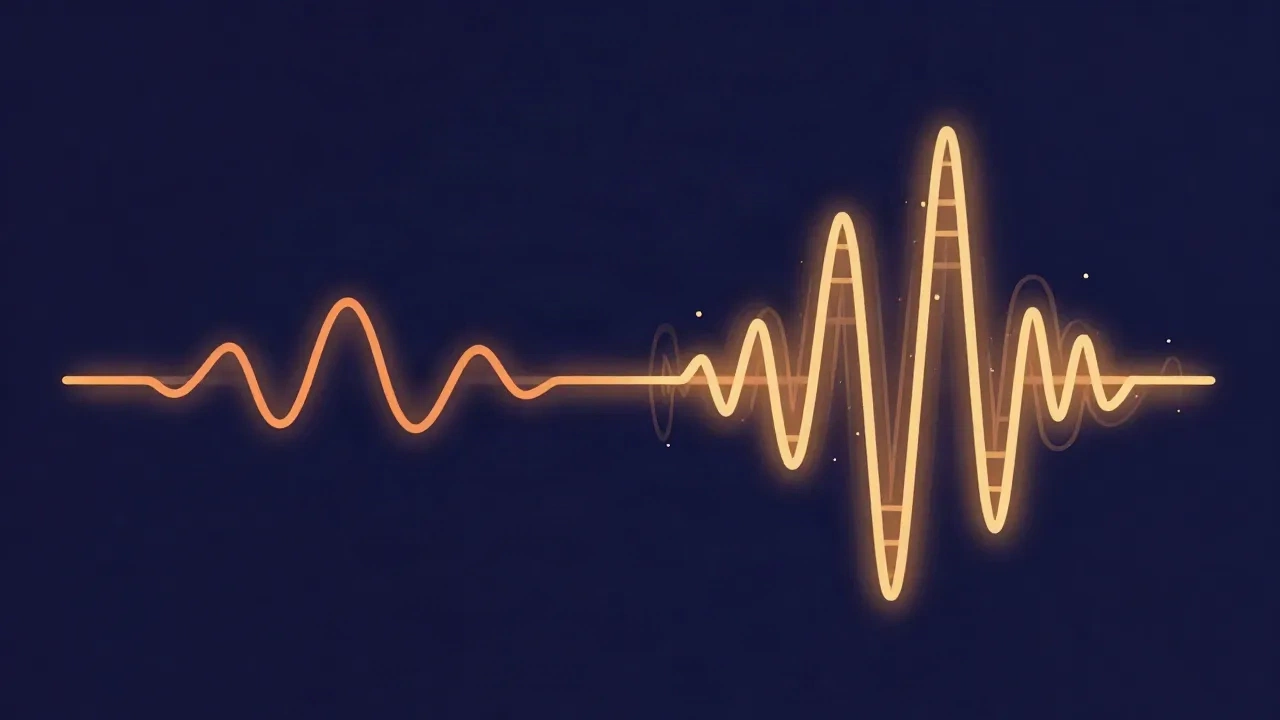
Harmonics are also why frequency and pitch aren't perfectly interchangeable in practice. The pitch you hear is tied to the fundamental, but the character you hear comes from everything stacked above it. This is the structure that pitch-detection and key-finding tools have to reason about, and it's why a rich, harmonically busy recording is harder to analyse than a single pure tone.
Why knowing frequencies actually helps
You don't need to memorise numbers to benefit from this. Even a rough sense of the frequency map changes how you work with audio.
Cleaning up recordings. Most annoying noise lives at specific, predictable frequencies. A steady electrical hum sits at 50 or 60 Hz (and multiples of it), down in the bass. Hiss is broadband energy up in the brilliance range, above 6 kHz or so. Knowing where a problem lives is half of fixing it — a noise reducer that targets hum and hiss at their specific frequencies works by attenuating exactly those regions while leaving the rest of the sound alone. When you can name where a problem sits, you stop guessing.
Mixing and balancing. When two instruments sound muddy together, it's often because they're competing for the same band — two parts both crowding the low-mids, for instance. The fix is to carve a little space in one so the other can breathe. That's an EQ decision, and it's only obvious once you think in bands.
Understanding what you're seeing. Frequency is invisible in a normal waveform, which only shows loudness over time. To actually see which frequencies are present and when, you need a different view — which is exactly what a spectrogram provides, plotting frequency up the side and time along the bottom. A hum becomes a bright horizontal line; hiss becomes a haze up top. Once you can read frequency, that picture stops being abstract and starts pointing at real problems.
Everything on vocalcut.com runs entirely in your browser — the audio you load never leaves your device, and there's no account to create. That makes it a low-stakes place to experiment: load a track, look at its frequencies, nudge a band, and hear what changes. Frequency is the language underneath all of it, and a little fluency goes a long way.
Frequently asked questions
What is audio frequency measured in? Frequency is measured in hertz (Hz), which counts how many cycles a sound wave completes per second. One hertz is one cycle per second; 1,000 Hz is one kilohertz (kHz). A 440 Hz tone vibrates 440 times a second. Higher numbers mean higher-pitched sounds, and doubling the frequency raises the pitch by one octave.
What is the range of human hearing? Human hearing covers roughly 20 Hz to 20,000 Hz (20 kHz) in ideal conditions. Below 20 Hz sound is felt more than heard, and above 20 kHz is beyond human perception. The top of the range shrinks with age and loud-noise exposure — many adults hear up to only about 15–16 kHz — while the low end stays accessible longest.
Is frequency the same as pitch? They're closely linked but not identical words. Frequency is the physical measurement — how fast a wave vibrates, in hertz. Pitch is how your brain perceives that frequency as a musical note. For a simple tone they line up directly, but real sounds contain many frequencies at once (a fundamental plus harmonics), and the pitch you name comes from the fundamental while the character comes from the harmonics.
Why do two instruments playing the same note sound different? Because a note isn't a single frequency. Each played note has a fundamental frequency that sets the pitch, plus a stack of harmonics (overtones) above it. Every instrument emphasises a different pattern of harmonics, and that recipe — called timbre — is what your ear uses to tell a violin from a flute even when both play the exact same note.