What Is Phase Cancellation?
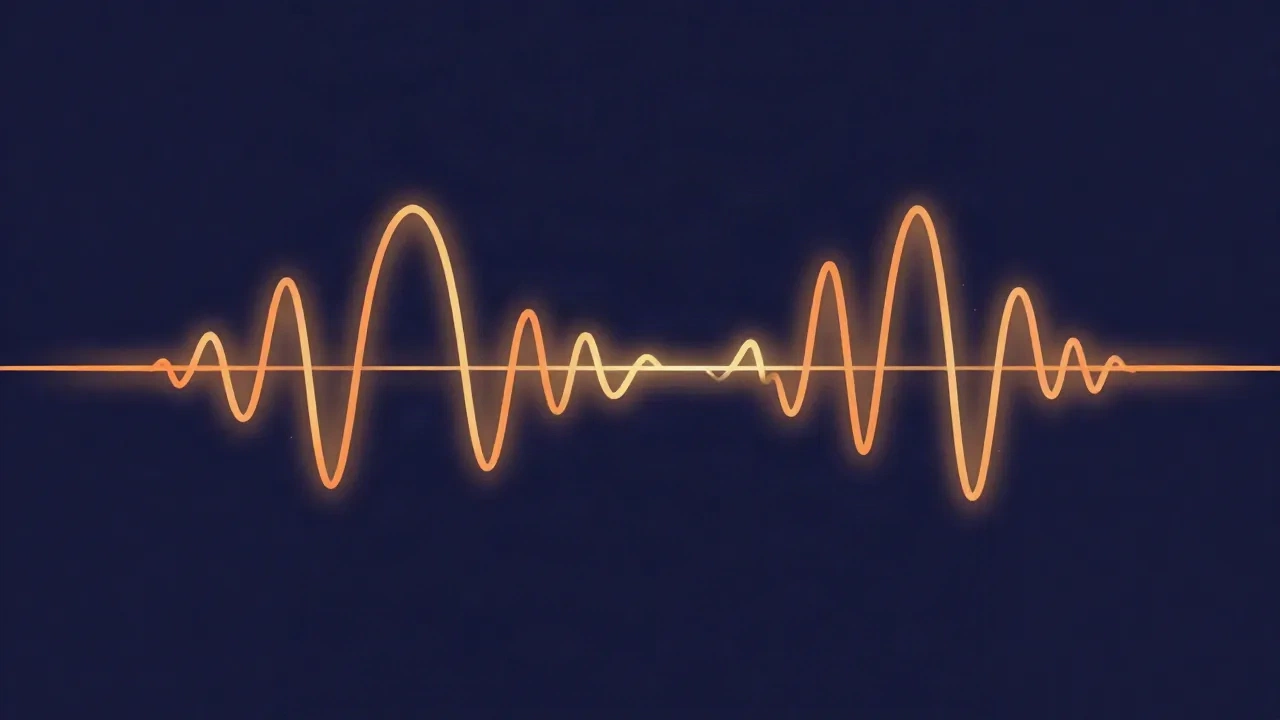
Phase cancellation is what happens when two sound waves overlap while out of step with each other, so their peaks and dips work against each other and the combined sound gets quieter — sometimes disappearing completely. It is not a bug or a broken file. It is just how waves add together, and once you understand it you start hearing it everywhere: in a thin-sounding mix, in a hollow recording made with two microphones, and in the old trick for pulling vocals out of a song.
Let's build it up from the physics, because the physics is genuinely simple.
What "phase" means
A sound wave is a pattern that rises and falls over time — pressure pushing up, then dropping down, over and over. If you have ever seen the squiggly line that represents a sound file, you have seen this; that line is the waveform, a picture of the wave climbing and falling as the seconds pass.
Phase is simply where a wave is in that up-and-down cycle at a given instant. Think of it like the position of a swing: at the top of its arc, at the bottom, halfway down. Two waves are "in phase" when they rise and fall together — both hitting their peaks at the same moment. They are "out of phase" when one is peaking while the other is dipping. Phase is usually measured in degrees, where a full cycle is 360 degrees, so "180 degrees out of phase" means one wave is doing the exact opposite of the other at every moment — a perfect mirror image, flipped upside down.
That mirror-image case is the important one, and it has a special name: the wave is inverted, or polarity-flipped.
What happens when waves meet
Sound waves add together. When two waves arrive at the same point — your eardrum, a microphone, a mixing bus — the air pressure at that point is just the sum of the two. This is called interference, and it comes in two flavors.
Constructive interference is when the waves are in phase. Two peaks land at the same time, so they stack up and the result is louder. Two waves in step make a bigger wave.
Destructive interference is the opposite. When one wave is pushing the pressure up exactly as the other is pulling it down, the two contributions subtract. If the waves are identical in shape and volume but 180 degrees out of phase, every peak of one lines up with an equal dip of the other, and they sum to nothing. A flat line. Silence. That total wipe-out is phase cancellation in its purest form.
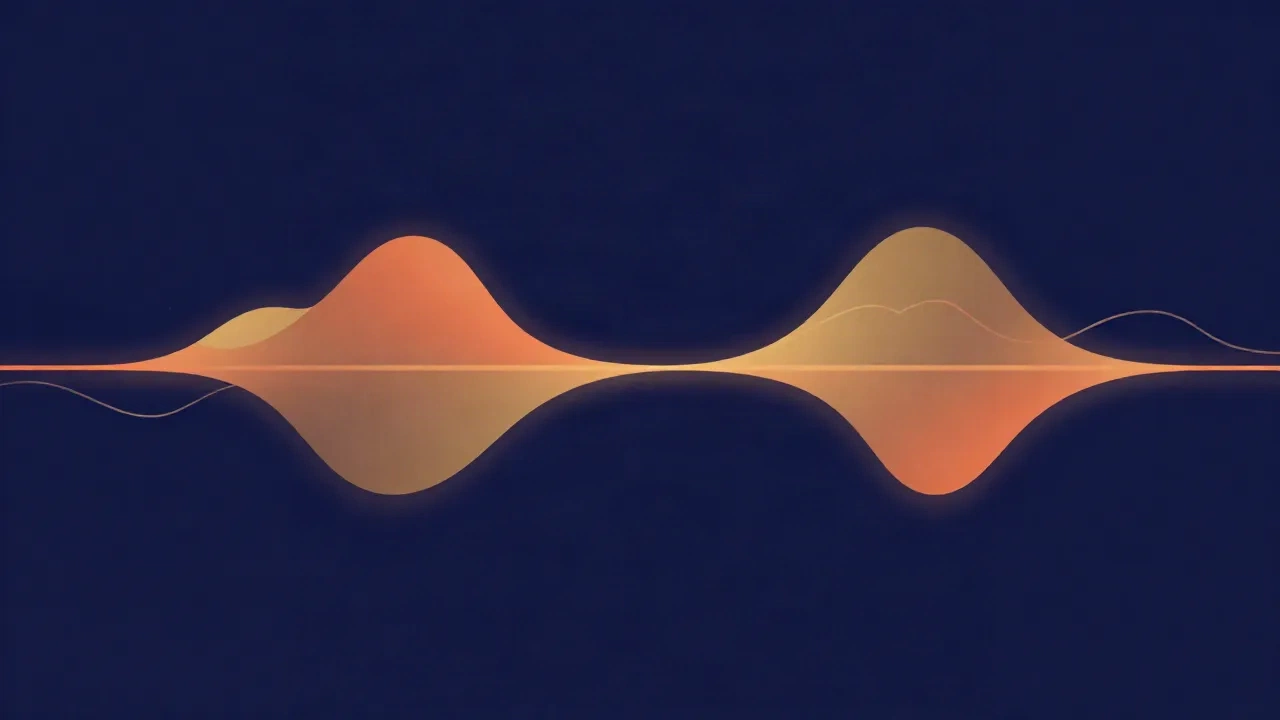
In the real world, perfect cancellation is rare — two sounds are seldom exact opposites at every frequency and every instant. What you get far more often is partial cancellation: some frequencies drop out, others survive, and the overall sound gets thinner, hollower, or oddly colored rather than vanishing entirely. That partial version is responsible for most of the phase problems people actually run into.
Where phase cancellation shows up
Once you know what to listen for, cancellation turns up in a lot of everyday audio situations.
Mono compatibility and stereo summing
A stereo track has a left and a right channel. Plenty of listening situations collapse those two channels into one — a single Bluetooth speaker, a phone earpiece, many club and PA systems, and countless "mono fold-down" scenarios. When left and right get summed, anything that is out of phase between the two channels cancels.
This is why engineers "check their mix in mono." A wide, lush stereo effect can sound spectacular in stereo and then partly evaporate the moment it is summed — the widened parts were relying on out-of-phase content that cancels on fold-down. If you want the deeper version of how the two channels relate, mono versus stereo audio covers the summing math and why width can betray you.
Comb filtering and mic bleed
Record one source with two microphones and you have set a trap for yourself. Because the mics sit at slightly different distances from the source, the same sound reaches them a fraction of a millisecond apart. When you combine those two signals, that tiny delay puts them out of phase — but only at certain frequencies. The result is a series of regularly spaced notches across the spectrum called comb filtering (it looks like the teeth of a comb), and it makes the sound hollow, phasey, or metallic.
The same thing happens with mic bleed: a vocal microphone also picks up the guitar sitting nearby, at a different time than the guitar's own close mic. Combine the tracks and the delayed, out-of-phase copy of the guitar fights with the direct one. This is a real hazard any time you record with more than one input — the fix is usually careful mic placement (the "3-to-1 rule") or nudging one track in time so the copies realign.
The vocal-removal trick
The most famous deliberate use of phase cancellation is the old do-it-yourself vocal remover. In most songs the lead vocal is panned dead-center, meaning it is identical in the left and right channels. Invert one channel, sum the two, and anything identical on both sides — the centered vocal — cancels to silence.
It works, sort of, but it is crude: it also removes the centered kick and bass, collapses the song to mono, and leaves any stereo reverb or doubled takes behind as ghosts. Crucially, it is not recognizing the voice at all — it is just doing subtraction based on stereo geometry. Modern tools threw this approach out. The AI vocal remover uses a neural network (HTDemucs) that identifies the sound of a voice rather than exploiting where it sits, which is why it keeps the bass intact and works on off-center vocals. If you want the full before-and-after, how AI vocal removal actually works walks through exactly why the phase trick lost.
Noise-cancelling headphones
Here is phase cancellation working for you. Active noise-cancelling headphones have a tiny microphone that listens to the droning sound around you — an airplane engine, a train. The headphone then generates the inverted version of that noise and plays it into your ear. The incoming rumble and its mirror image sum at your eardrum and destructively interfere, so the drone drops away while your music (which the headphone is not inverting) plays on top. It is the same physics as the vocal trick, pointed at ambient noise instead of a centered voice.
How to detect and avoid unwanted cancellation
Most of the time you want to prevent cancellation, not create it. A few habits catch it early.
- Check in mono. Sum your mix to mono and listen. If a part suddenly gets thin, quiet, or disappears, it has phase content that is cancelling. This is the single most useful test.
- Watch the low end. Bass and kick are usually centered and mono; phase problems there are easy to hear as a loss of weight and punch. Weak, hollow low end after combining tracks is a classic cancellation symptom.
- Compare the waveforms. If two tracks should reinforce each other but the summed result is quieter than either alone, look at the waveforms: one may be an inverted or time-shifted copy of the other. Many editors have a simple "invert polarity" button that flips one track so the two realign.
- Mind the timing. Comb filtering comes from small delays. When you join or layer audio files, copies of the same material that are offset by a few milliseconds will comb-filter when they overlap. Line up the transients, or the shared content, so the copies sit on top of each other.
- Think in frequencies. Because a fixed time delay cancels some frequencies while boosting others, phase issues are frequency-dependent — a reason it helps to understand how audio frequencies work when you are chasing down a hollow-sounding track.
None of this requires special gear. The mono check and a look at the waveforms will explain the vast majority of "why does this sound thin?" mysteries. And if you ever want cancellation — to strip a centered vocal or to null two takes against each other — the very same rules tell you how to line the waves up so they cancel on purpose.
Frequently asked questions
Is phase cancellation always a bad thing? No. Unwanted cancellation thins out mixes and hollows out multi-mic recordings, so most of the time you are trying to avoid it. But the same physics is used deliberately and usefully: noise-cancelling headphones invert ambient noise to erase it, and the old vocal-removal trick inverts one stereo channel to cancel a centered voice. Cancellation is just a tool — useful when you aim it, annoying when it sneaks in.
What is the difference between phase and polarity? They are related but not the same. Polarity is the simple case: flipping a wave completely upside down, a 180-degree inversion at every frequency. Phase is the broader idea of where a wave sits in its cycle, which can differ by any amount and, when caused by a time delay, by different amounts at different frequencies. A polarity flip is one specific, uniform kind of phase relationship; comb filtering from a delay is a more complicated one.
How do I know if my track has a phase problem? Sum it to mono and listen. If a part gets thinner, quieter, or vanishes when the stereo channels are combined, out-of-phase content is cancelling. A weak, hollow low end after combining tracks is another giveaway, and comparing the waveforms will often reveal that one track is an inverted or slightly time-shifted copy of another.
Why does combining two recordings of the same thing sound worse, not louder? Because the two microphones captured the sound a fraction of a millisecond apart, so the copies are out of phase at certain frequencies. Summing them causes comb filtering — a row of notches across the spectrum that makes the result hollow instead of bigger. The fix is to align the two tracks in time, flip the polarity of one if needed, or follow the 3-to-1 mic-spacing rule when recording.