What Is Dynamic Range in Audio?
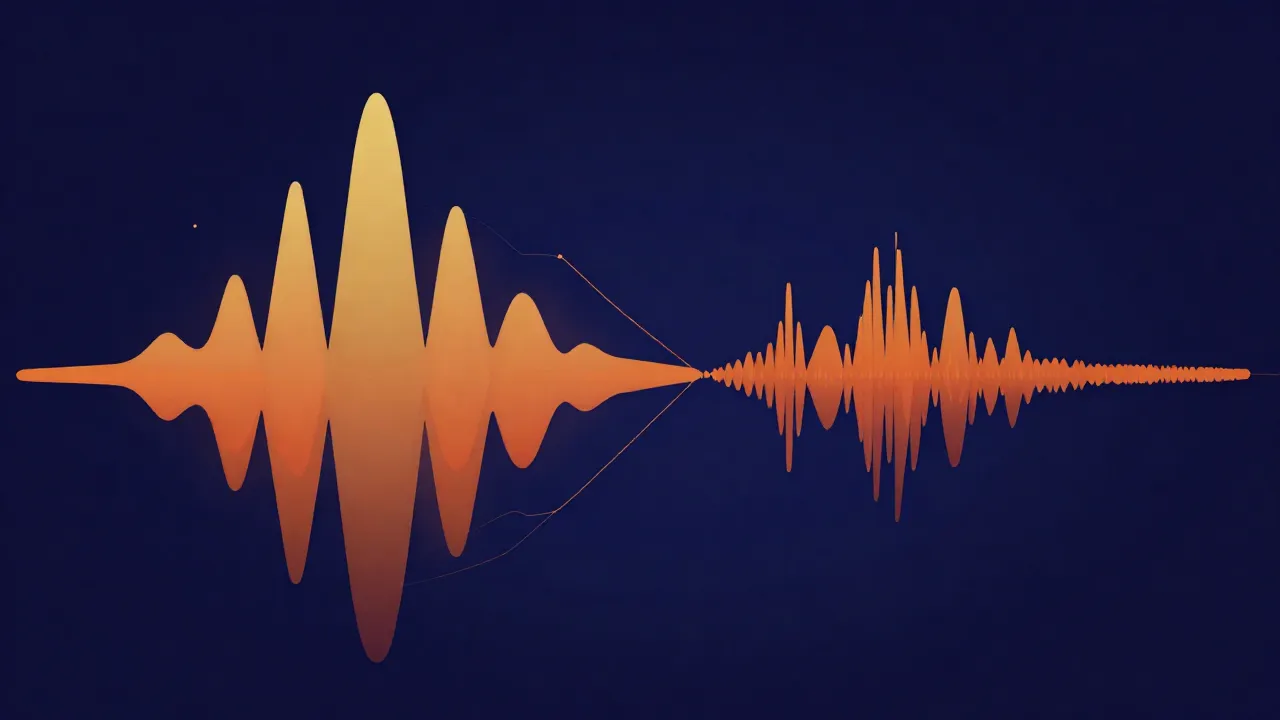
Dynamic range is the span between the quietest and loudest parts of a piece of audio, measured in decibels (dB). A track with wide dynamic range has a real difference between its softest moments and its biggest hits; a track with narrow dynamic range sits at roughly one level the whole way through. That gap — how far the sound travels between quiet and loud — is what gives music its sense of movement, and it's a completely separate thing from how loud the track is overall.
What the number actually measures
Picture a full song. There's a whispered intro, a verse that settles in, a chorus that opens up, maybe a breakdown that drops to almost nothing before the last hit lands. Dynamic range is the distance, in decibels, between the softest of those passages and the loudest. If the quiet parts sit around -40 dB and the peaks reach near 0 dB, you've got a wide, roughly 40 dB spread. Squash everything into the top few decibels and that spread collapses.
Because the decibel scale is logarithmic, those numbers describe a bigger difference than they look. Every 6 dB is roughly a doubling of level, so a 40 dB range isn't twice as wide as a 20 dB one — it's the difference between music that breathes and music that shoves. Live acoustic and orchestral recordings can carry 50 dB or more of range. A heavily processed pop or EDM master might live inside 6 to 8 dB. Both can be the right call; they're just different tools.
It helps to separate two ideas that often get tangled. Loudness is how loud the whole thing feels on average — the territory of LUFS, the loudness measurement unit. Dynamic range is the distance between the quiet and loud parts within that track. You can have a quiet track with huge dynamic range and a very loud track with almost none. Loudness is a level; dynamic range is a span.
Why dynamic range matters
Dynamic range does three jobs that are easy to feel and hard to fake.
Impact. A chorus only hits hard because the verse before it held back. Contrast is what makes a drop land or a crescendo swell — the loud part borrows its power from the quiet part next to it. Flatten the difference and the big moment has nothing to push against.
Clarity. When quiet and loud elements keep their natural spacing, individual parts stay legible: you can hear the reverb tail decay, the pick attack, the space around a vocal. Cram everything to the same level and those details get buried in a constant wall of sound.
Comfort. Audio that stays pinned at maximum with no relief is tiring to listen to. This is listening fatigue — the low-grade exhaustion of sound that never lets up. Dynamics give the ear somewhere to rest, which is a big part of why some tracks stay pleasant for an hour and others wear you out in two songs.
The loudness war
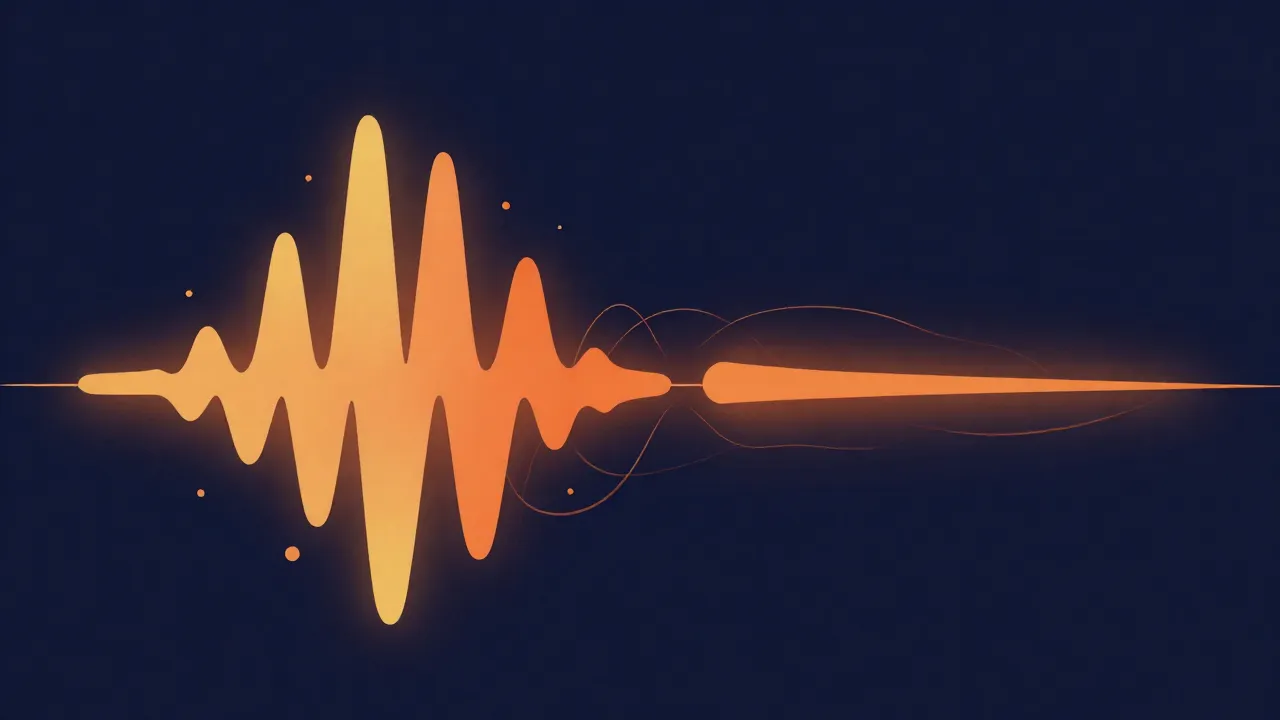
For a couple of decades, records got measurably louder — and it cost dynamic range to do it. The reasoning went that a louder track grabs more attention on the radio or in a playlist, so mastering engineers pushed levels higher and higher. The only way to make an average level louder without clipping the peaks is to pull the peaks down toward the average, which is exactly what compression and limiting do. The gap between quiet and loud shrank, album after album, until some mainstream masters had almost no dynamic range left.
This period is usually called the loudness war, and its casualty was dynamics. Tracks that had once ranged freely became flat, dense, and — to a lot of ears — tiring. The instrument that made a chorus feel huge had been spent making the verse just as loud as the chorus.
How compression and limiting shrink the range
Two processors do most of the flattening, and it's worth knowing what each one actually does.
A compressor turns down the loudest parts of a signal once they cross a threshold you set. Turn down the peaks, then raise the whole thing back up to fill the space you freed, and the quiet parts come up while the loud parts stay put — the range between them narrows. Used gently, this is one of the most useful tools in audio: it evens out an erratic vocal or glues a mix together. Used hard, it erases dynamics on purpose.
A limiter is a compressor taken to its extreme: a brick wall that refuses to let anything exceed a ceiling. It's what mastering engineers reach for to raise loudness in the final stage, and it's the most direct way to trade dynamic range for level. Both tools are legitimate — the problems start only when you push them past the point of serving the music, purely to chase a number.
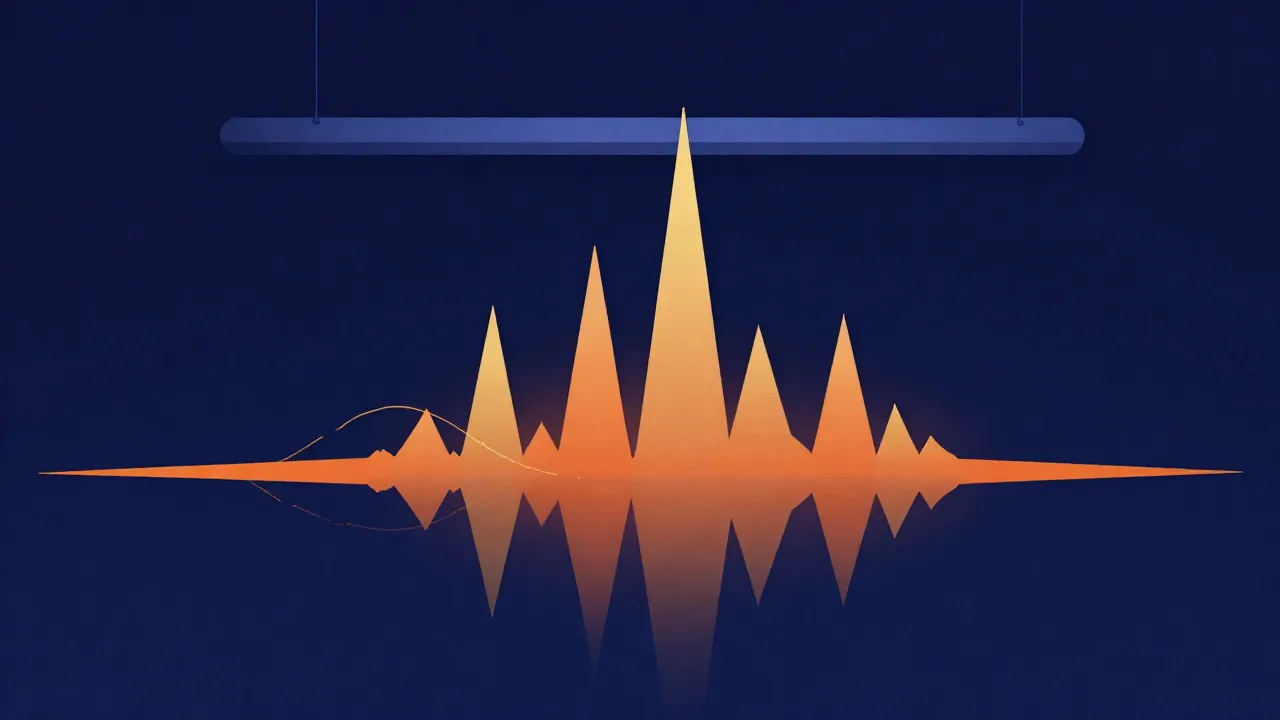
There's a related failure worth keeping separate. Reducing dynamic range with a limiter is a deliberate, controlled process. Audio clipping is the opposite: it's what happens when a signal simply exceeds the maximum the system can represent and the tops of the waveform get chopped off, adding harsh distortion. Narrow dynamic range is a squeezed span; clipping is a hard ceiling breached. One is a choice; the other is damage. (Leaving a little headroom — spare space below the ceiling — is how you avoid clipping while you work.)
Why over-compressing for loudness backfires now
Here's the twist that makes the loudness war obsolete: streaming platforms turn loud tracks back down.
Spotify, YouTube, Apple Music and the rest measure the integrated loudness of everything they play and normalize it toward a reference level, so a listener doesn't have to ride the volume knob between songs. Spotify publishes a target of -14 LUFS; broadcast under EBU R128 uses -23 LUFS; Apple Podcasts asks for around -16 LUFS. (Some platform numbers are published spec, others are just measured convention — the LUFS explainer sorts out which is which.)
The consequence is blunt. If you crush your master to be much louder than the platform's target, the platform simply attenuates it back down on playback. You gave up your dynamic range to win a loudness contest that no longer exists — and what the listener hears is your flattened, fatiguing master played back at the same level as a track that kept its dynamics. The squashed one usually loses. Loudness normalization didn't just end the loudness war; it inverted the incentive. The track that breathes now often sounds better at matched loudness, because it kept the contrast the other one threw away.
Preserving dynamics in your own work
You don't have to master like it's 2005. A few habits keep dynamic range intact:
- Mix into space, not against it. Leave headroom as you go so you're not forced to limit hard at the end just to claw back level.
- Compress to shape, not to flatten. Reach for a compressor to control a wayward part or add cohesion — not reflexively to make everything louder. Watch what it does to the quiet passages.
- Trust normalization. Master for the sound you want and let the platform handle level. Chasing an extra decibel of loudness past the target buys nothing and costs dynamics.
- A/B at matched loudness. "Louder" almost always sounds "better" for the first few seconds. Compare your processed and unprocessed versions at the same loudness and the illusion disappears — you'll hear what compression actually did.
You can do all of this in the browser. On vocalcut.com, every tool runs entirely on your own device — your audio never leaves it (the processing engines download to you, not your files up to a server), and there's no account or upload step. The in-browser mastering chain gives you compression and limiting with live LUFS metering and a level-matched A/B, so you can hear the dynamics trade-off honestly instead of being fooled by level. If you just need to bring a finished file to a consistent loudness without squashing it, the volume normalizer measures the track and applies gain to hit your target — and the step-by-step normalizing guide walks through the whole process.
Frequently asked questions
Is dynamic range the same as loudness? No. Loudness is how loud the whole track feels on average, measured in LUFS. Dynamic range is the distance in decibels between the quietest and loudest parts within that track. A very loud track can have almost no dynamic range, and a quiet track can have a huge one. They're independent.
Is more dynamic range always better? Not automatically. Wide dynamic range gives music impact, clarity, and comfort, but some genres and playback situations call for a tighter range — dense electronic music, or a mix meant for noisy earbuds on a train. The goal is dynamics that serve the material, not the largest possible number for its own sake.
Does reducing dynamic range cause distortion? Not by itself. Compression and limiting reduce dynamic range cleanly when used sensibly. Distortion is a separate failure called clipping, which happens when a signal exceeds the maximum level the system can hold and the waveform peaks get chopped. You can narrow dynamic range without clipping, and you can clip without touching the range.
How do I check a track's dynamic range? Compare the level of its loudest passages against its quietest — a meter that shows both peak and average level makes the gap visible. In practice, mastering with live loudness metering and a level-matched A/B, like the in-browser mastering chain on vocalcut.com, lets you hear and watch the range as you adjust compression.