What Is Slowed and Reverb?
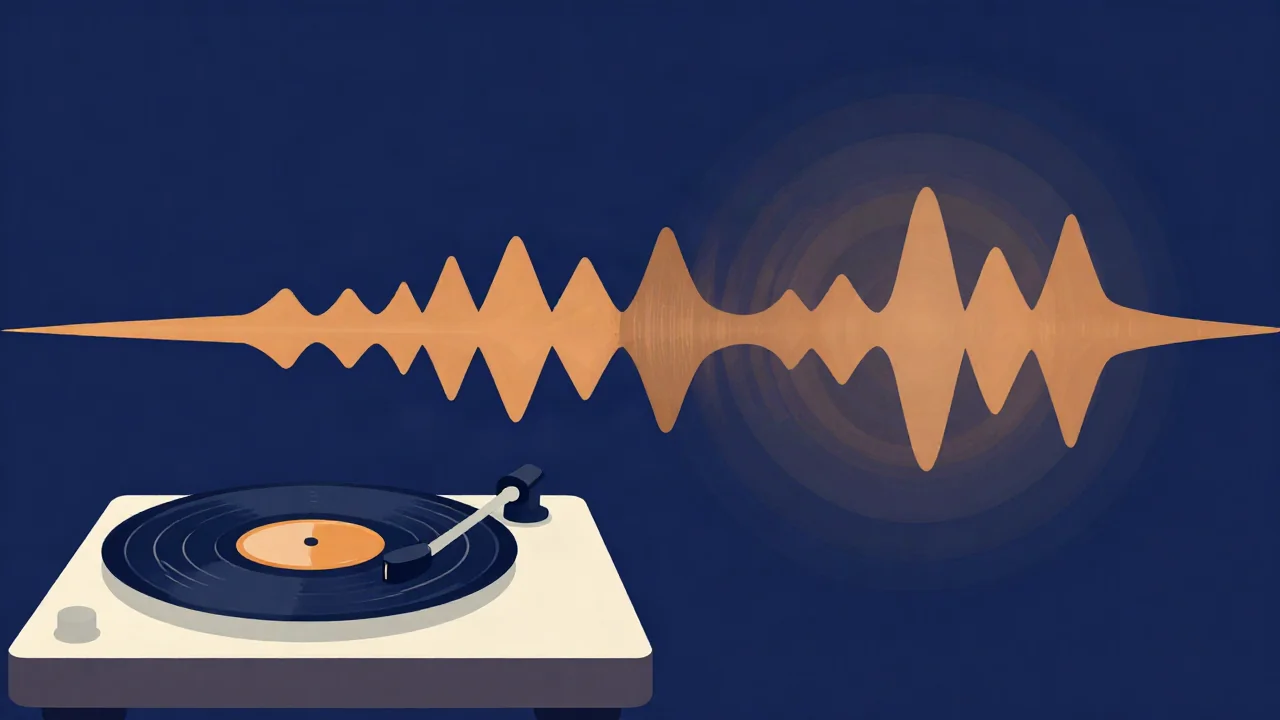
Slowed and reverb is a remix style where a song is played back slower, so its tempo and pitch both drop, and then washed in a long reverb tail, which is exactly what the free Slowed + Reverb tool does to a file you already have. The result sounds heavier and further away than the original: the singer's voice sits lower, the drums land with more weight, and everything seems to be playing in a large empty room. The tool runs in your browser, so your audio never leaves your device.
The two ingredients of a slowed and reverb song
The slowdown
The slowdown is a plain drop in playback rate, the digital version of running a record or tape slower than intended. Every sound wave is stretched out in time, so the song takes longer to play and every note comes out lower. A voice thickens and deepens, hi-hats lose their sparkle, and the kick drum gets rounder.
The reverb
Reverb is the trail of reflections a sound leaves in a physical space. A slowed and reverb edit uses a long one, often a couple of seconds or more, blended in under the song so each note hangs in the air after it ends. That fills the gaps the slowdown opened up between beats.
Put together, the track reads as dreamy or melancholic. Slower tempos and lower pitches tend to come across as calmer and sadder, and a long tail blurs the edges of the mix so it feels distant, a bit like music heard from another room. That's how the style is usually described, not a measured effect, and plenty of listeners just hear a muddier song.
Does slowed and reverb change the pitch?
Yes. In a typical slowed and reverb edit the pitch drops along with the tempo, and that lower, slightly detuned sound is a large part of the style.
People get this wrong because there are two ways to slow audio down. A rate change plays the same samples back more slowly, so tempo and pitch always move together. That's what slowed and reverb uses. A time-stretch rebuilds the audio so it lasts longer while each note stays at its original pitch, which is what practice and transcription tools do.
With a rate change, the pitch drop is predictable: semitones = 12 × log2(rate).
| Playback speed | Pitch change | Roughly |
|---|---|---|
| 90% | about −1.8 semitones | just under a whole step down |
| 87.5% | about −2.3 semitones | a little over a whole step |
| 85% | about −2.8 semitones | close to a minor third |
| 80% | about −3.9 semitones | nearly a major third |
None of those land exactly on a semitone, which is why a slowed edit sits in between keys and won't line up with an instrument tuned normally. How Pitch, Speed, and Duration Relate goes through the mechanics in more detail.
If you want the tempo down and the pitch left alone, that's a different job. The Speed Changer slows a track without changing its pitch, which is the right choice for learning a part by ear, and there's a guide for it: Slow Down a Song Without Changing Pitch. That's a utility slowdown, not this style.
Where slowed and reverb came from
Slowed and reverb descends from chopped and screwed, the technique DJ Screw developed in Houston in the early 1990s. He slowed records down and then worked them by hand on turntables: skipping beats, scratching, stopping the record for a moment, and cutting back to repeat a phrase. The slowing was the "screwed" part and the cutting was the "chopped" part.
Slowed and reverb keeps the slowdown, adds reverb, and leaves out the chopping. Houston producer Jarylun Moore, who posts as Slater, is widely credited with popularizing the format on YouTube, starting in 2017 with an edit of Lil Uzi Vert's "20 Min". Slowed and reverb songs spread across YouTube through 2018 and 2019, usually paired with a looping anime clip, and the style took off on TikTok around 2020.
The TikTok wave drew criticism. In 2020 a lot of people pointed out that the style was circulating as if it were a new invention, with no credit to DJ Screw or to the Houston chopped and screwed culture it was borrowed from. The criticism was fair.
Slowed and reverb vs chopped and screwed, nightcore, and a plain slowdown
These four get mixed up a lot, mostly because three of them start with the same move.
| Style | Speed | Pitch | What else is done |
|---|---|---|---|
| Slowed and reverb | Slower | Drops with the speed | Long reverb added; the arrangement is untouched |
| Chopped and screwed | Slower | Drops with the speed | Skipped beats, scratching, stop-time, repeated segments |
| Plain slowdown (time-stretch) | Slower | Unchanged | Nothing; made for practice or timing fixes |
| Nightcore | Faster | Rises with the speed | Usually nothing else |
Nightcore is the same rate-change trick pointed the other way, so the voice gets higher and brighter instead of lower. The steps for that are in How to Make a Nightcore Song.
Two neighbouring styles cause the same confusion. A lo-fi remix leans on texture rather than speed: rolled-off highs, tape wobble, vinyl crackle. Some tools sold as a lofi maker bundle a slowdown in, but the two aren't the same thing, and How to Make a Lo-Fi Remix covers that sound. And 8D audio leaves speed and pitch alone and moves the song around your head instead, as explained in What Is 8D Audio (and Does It Work)?.
There are more definitions like these in the Audio Explainers section.
How much slowing and reverb is typical?
There's no official standard. Edits commonly sit somewhere around 80–90% of the original speed, but that's typical practice and not a rule, and the reverb amount is entirely a matter of taste.
For reference, these are the ranges in our own slowed and reverb maker, the Slowed + Reverb tool:
- Speed: 70% to 100%, starting at 85%
- Reverb mix: 0% to 80%, starting at 35%
- Reverb length: 1 to 5 seconds, starting at 2.5 seconds
You hear the changes live as you drag the sliders, and the finished edit exports as WAV or MP3 (Opus too in browsers that support it). No AI model is involved, only a rate change and a reverb. People also search for this as a slowed and reverb converter, but nothing is converted: the tool renders a new file with the effect baked in.
For the steps, and how to fix an edit that has turned to mud, see How to Make Slowed + Reverb Songs.
What making an edit doesn't give you
Slowing a song and adding reverb doesn't make it yours. The recording and the composition still belong to whoever owned them before, and a changed speed is not a licence to post the result. Platforms can still match an edited track to the original, though not every time, and remove or claim the upload. Labels and artists now release official slowed and sped-up versions of their own songs, a reminder that the commercial right sits with the rights holders. Copyright and Fair Use in Music Sampling lays out where the lines are.
Frequently asked questions
Is slowed and reverb the same as chopped and screwed?
No. Both slow a song so its pitch drops, but chopped and screwed also cuts the track up by hand with skipped beats, scratching, stop-time and repeated phrases, as DJ Screw did in Houston in the early 1990s. Slowed and reverb leaves the arrangement intact and adds a long reverb instead. It grew out of chopped and screwed and owes it the slowed sound.
Does slowed and reverb change the pitch?
Yes. A slowed and reverb edit lowers the playback rate, and pitch falls with speed. At 85% speed a song drops by about 2.8 semitones, and at 80% by about 3.9. That lower, slightly detuned sound is part of the style. Slowing a song without changing its pitch needs a time-stretch tool, which is a different process.
Who started slowed and reverb?
The slowed sound comes from DJ Screw, who developed chopped and screwed in Houston in the early 1990s. The slowed and reverb format on YouTube is widely credited to Houston producer Jarylun Moore, known as Slater, who began posting edits in 2017, starting with Lil Uzi Vert's "20 Min". The style then spread on YouTube and later on TikTok.
Why do slowed and reverb songs sound sad or dreamy?
Slowing a song lowers both its tempo and its pitch, and slower, lower music tends to come across as calmer and more melancholic. The long reverb then blurs the edges of each sound, so the track feels distant, like music playing in a big empty room. Together those two changes give slowed and reverb songs their hazy, wistful character.
Is there a free slowed and reverb generator online?
Yes. Vocal Cut's Slowed + Reverb tool is a free slowed and reverb generator that works online in your browser, with no account. You drop in a song file you already have, set the speed, reverb mix and reverb length, preview it live, and export a WAV or MP3. Your audio never leaves your device, because the processing happens on it.