What Is Brown Noise?
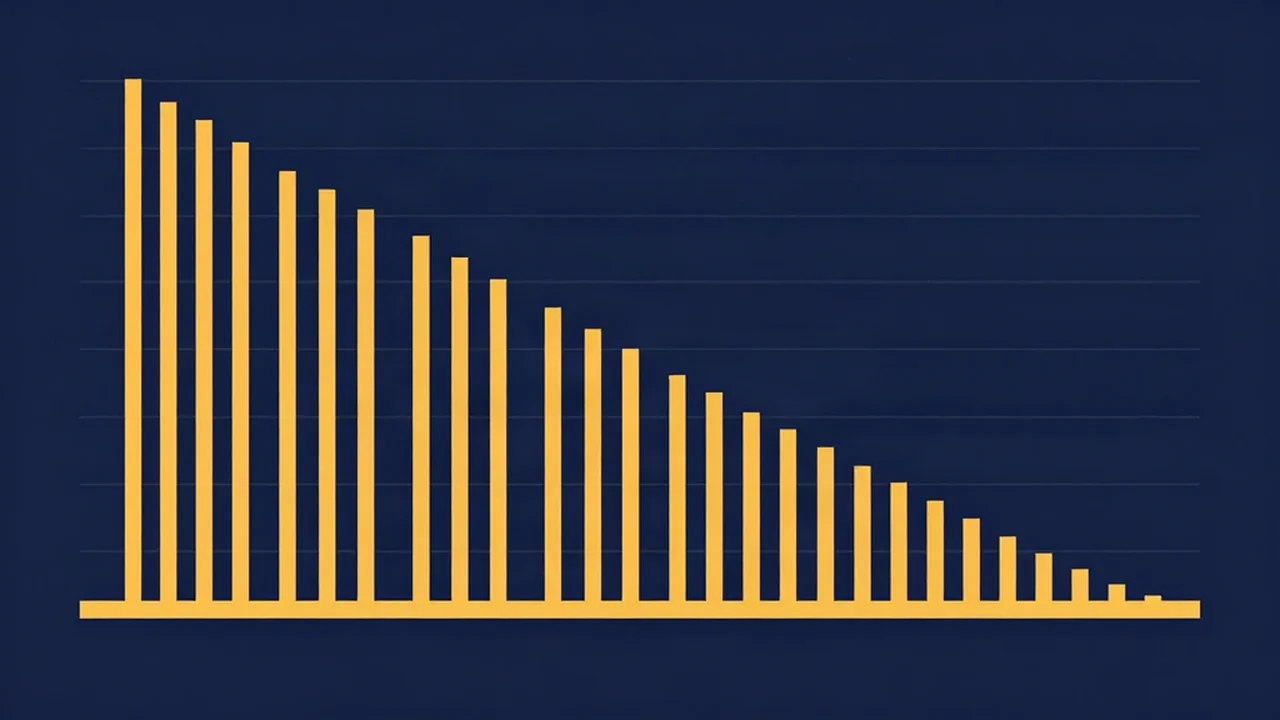
Brown noise is random noise whose power density drops by 6 dB for every octave you go up, so most of its energy sits in the low frequencies and it sounds deep, soft and rumbly. You can play it in your browser with our Noise Generator, which synthesises white, pink or brown noise in code with brown selected by default. Brown noise is also called red noise or Brownian noise.
How brown noise differs from white and pink noise
Noise "colours" describe how energy is spread across the spectrum. The differences come down to one number: the slope. (For a side-by-side guide to choosing between them, see brown noise vs white noise.)
- White noise has equal power per hertz. Because each octave up contains twice as many hertz as the one below, the treble carries most of the energy, which is why white noise sounds hissy.
- Pink noise falls by 3 dB per octave (power ∝ 1/f), so every octave holds equal energy. It sounds more balanced, like steady rain.
- Brown noise falls by 6 dB per octave (power ∝ 1/f²). The highs are far quieter than the lows, which gives the rumble of a waterfall heard from a distance or the low roar inside an airplane cabin.
If the decibel arithmetic is new to you, what a decibel actually measures covers why a 6 dB drop means a quarter of the power. You can also watch the slope directly: play each colour into a spectrum analyzer and you'll see white noise sit flat while brown noise tilts steeply downward toward the treble.
Why it's called "brown"
The name has nothing to do with the colour brown. It comes from Brownian motion, the random jittering of particles in a fluid that botanist Robert Brown described in 1827. Brown noise is a random walk: each new sample is the previous one plus a small random step. Mathematically, that's the integral of white noise, and integrating a signal is what tilts its spectrum by -6 dB per octave.
The Vocal Cut generator builds it this way. It takes white noise and passes it through a leaky integrator, a random walk that is gently pulled back toward zero so it can't drift off forever. Pink noise in the same tool uses a -3 dB/octave filter instead.
What frequency is brown noise?
Brown noise isn't one frequency. It's a spectrum that covers the whole audible frequency range, from the lowest bass to the top of the treble, with far more energy at the bottom. So when people search for "the brown noise frequency," the honest answer is "all of them, weighted low." In bass, mid and treble terms, brown noise is bass-heavy with very little treble. That missing treble is why it sounds smoother than white noise.
Deep, super deep and smooth brown noise
Search YouTube or a sleep app and you'll find "deep brown noise," "super deep brown noise" and "smoothed brown noise." These are informal labels, not technical standards. In practice they sound like brown noise with even more of the highs rolled off, the way a low-pass filter in an EQ would, so what's left is mostly a low rumble. Two tracks with the same label can sound noticeably different, because nobody defines where "deep" starts.
Brown noise for sleep and focus
Many people use brown noise for sleep, for focus or to mask distracting sounds such as traffic or a noisy neighbour. A steady sound can make sudden noises less noticeable, and some listeners find the low rumble less harsh than white noise. The research on noise and sleep is limited and its results are mixed, though, and it isn't a medical treatment. If you have ongoing sleep or hearing problems, talk to a doctor.
Volume matters most. Keep it moderate, quieter than normal conversation, especially if it runs for hours. Avoid placing a speaker right beside your head, and be careful with headphones overnight. The generator's sleep timer can stop playback after a set time so it doesn't play all night.
What is a white noise generator?
A white noise generator is a tool that synthesises noise rather than playing back a recording. Most of them, ours included, offer several colours. The Noise Generator creates white, pink or brown noise in code, so no audio file is shipped. Generation happens on your device, and your audio never leaves it. You can also export a loopable clip as WAV, MP3 or Opus to use in a playlist or video.
Frequently asked questions
What is the difference between brown, white and pink noise?
They differ in how power is spread across frequencies. White noise has equal power per hertz and sounds hissy. Pink noise falls 3 dB per octave and sounds balanced. Brown noise falls 6 dB per octave and sounds deep and rumbly.
Is brown noise good for sleep?
Some people find it helps them fall asleep by masking disruptive sounds, and many prefer its low tone to white noise. The scientific evidence is limited and mixed, so treat it as a personal comfort tool, not a treatment.
Is it safe to play brown noise all night?
Keep the volume moderate, well below conversation level, and keep the speaker away from your head. Long exposure at high volume can harm hearing. A sleep timer lets the noise stop once you're asleep.
What frequency is brown noise?
It has no single frequency. Brown noise contains the whole audible spectrum, with energy concentrated in the low end and falling 6 dB for every octave up.
Why is it called brown noise?
It's named after Brownian motion, which Robert Brown observed, not the colour. Brown noise is a random walk, the integral of white noise, just like the path of a particle in Brownian motion.